Illustrated review edition
2024-2025 Impact Report
Opportunity starts with access.
This report is available for review. Reporting dates and some figures still need confirmation; the notes identify those limits throughout.
Our foundation
Where it all started.
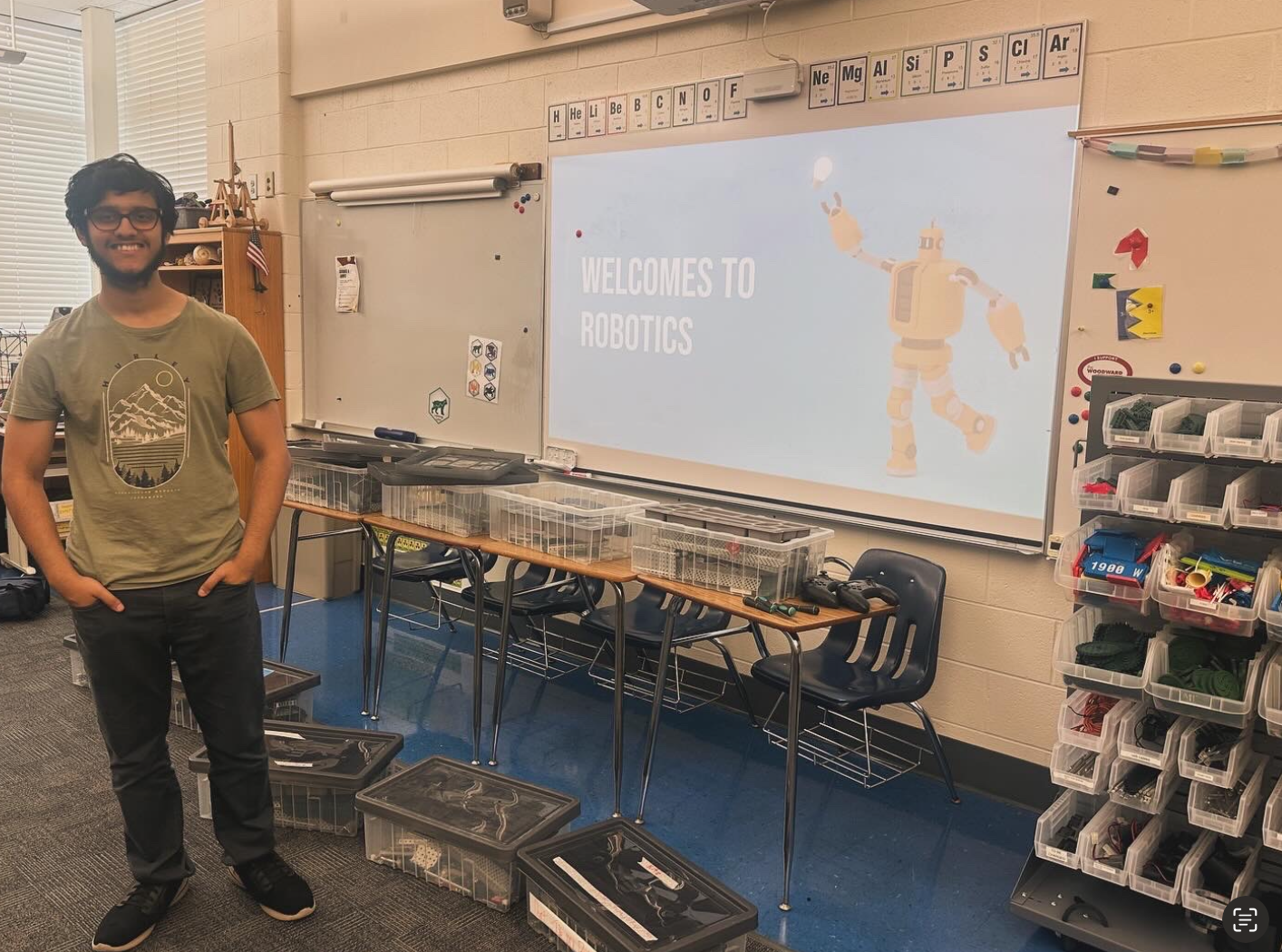
Minorities in STEM began in 2024 at Woodward Academy with a purpose: to bridge the gap between underrepresented students and opportunities in science, technology, engineering, and mathematics.
The first robotics workshop gives that beginning a concrete setting. The classroom, kits, and welcome presentation show the starting point of an organization built around making STEM more approachable. The photograph is included as an origin story, rather than evidence of a dated attendance total.
The mission described on our website combines access with community: creating space for conversations, inviting people from different fields to share their experience, and helping students see a place for themselves in STEM.
The 2024-2025 snapshot
An early network.
11Chapters
100+Volunteers
4States
5Countries
Our existing 2024-2025 impact summary records 11 chapters, more than 100 volunteers, activity across four states, and a presence across five countries. These are the figures carried forward in this edition.
The same summary reports more than 100,000 students reached globally. It describes a broad mix of chapters, community programming, resources, research, podcasts, and outreach. A deduplicated participant count, collection method, and precise start and end dates were not supplied with the summary.
These measures describe different parts of the work. Chapter and volunteer figures indicate organizational activity; broad reach is not the same as workshop attendance or a measured improvement in learning. They should not be added together.
The current homepage has larger organization-wide figures. Those later figures are not substituted for this earlier snapshot, and no growth percentage is calculated between the two.
How the mission takes shape
Access through community.
Local leadership. Chapters give students a way to organize around the needs of their own schools and communities. Our stated goal is a connected network of students, volunteers, speakers, and chapter leaders.
Conversations and role models. The founding mission calls for guest speakers and input from people in different fields and backgrounds. This is an approach to broadening exposure, not a claim about a verified number of talks delivered in this period.
Robotics as an entry point. The first workshop makes the mission tangible: a place to encounter equipment and explore STEM. The user-provided origin photograph anchors this story without inventing participant experiences or testimonials.
Resources and encouragement. The website describes educational resources and community support as part of the organization. Period-specific publication counts and learner feedback have not yet been reconciled for this edition.
Together, these strands describe the organization being built: opportunities to participate, people to learn alongside, and reasons to keep exploring. Evidence of long-term educational outcomes will require follow-up with participants.
Reflection and accountability
What the record shows.
The clearest documented achievement in the early record is the establishment of an organization and a chapter network around a defined access mission. The earlier summary supplies an initial scale of activity, while the workshop photograph supplies a human starting point.
The available record does not establish how many individual students attended workshops, whether confidence or attainment changed, or how long participants remained involved. This report does not infer those outcomes from the reach figure.
Proposed next steps. Keep dated activity records; distinguish unique participants from repeat attendance; document the type of support delivered; and collect optional participant feedback with permission to share it.
People behind the work. Students, chapter organizers, volunteers, and collaborators make the mission possible. This edition acknowledges those groups without assigning unverified names or roles to a particular year.
The purpose of future reporting is to make the connection between activity and benefit clearer: what happened, who took part, and what participants say or demonstrate they gained.
Sources and reporting notes
About this edition.
Status: review edition. This is a complete narrative draft based on the organization's existing materials. The exact reporting dates and the underlying records for published figures still need confirmation. It is not an audited impact or financial statement.
Reporting label. The title follows the existing website's 2024-2025 summary. It does not assume a particular school-year boundary. Current programs and undated activities have not been counted as annual results.
Sources. The original 2024-2025 impact page from the officialMISwebsite repository; the Our Mission + Goal page; and the first-workshop photograph and context provided by Minorities in STEM. Website materials were reviewed in September 2026.
To finalize. Confirm start and end dates, the reach methodology, chapter and volunteer records, photo dates and publication permissions, and any participant quotations to add. No budget, donation totals, or measured learning outcomes were available for inclusion.
Explore and contribute. Visit minoritiesinstem.org/chapters to explore the network, minoritiesinstem.org/get-involved/start-chapter to get involved, or minoritiesinstem.org/contact to contact the organization.